How to Get a Prescription for a Cranial Prosthesis

Share
Insurance & Medical Wigs
How to Get a Prescription for a Cranial Prosthesis
A guide for patients, and for the physicians who prescribe. Print Part Two and hand it to your doctor.
Most denied claims for medical human hair wigs are not denied because the patient was ineligible. They are denied because of a word, a missing code, or a date.
This guide fixes that. The first half is for patients. The second half is written so your doctor can read it in ninety seconds and write a prescription that clears utilization review on the first pass. Both templates are copy and paste ready.
If you read nothing else
- Call your insurer first and ask which HCPCS code they process a cranial prosthesis under: A9282, S8095 or L8499.
- Get the prescription dated before you buy. Many plans will not reimburse a purchase that precedes the order.
- The word wig must not appear on the prescription, the letter of medical necessity, or the invoice.
- Ask for a specific ICD-10 code. "Alopecia" on its own is not a diagnosis.
- Print Part Two and hand it to your doctor.
In this guide
- The one word that gets claims denied
- Part One: For patients
- Part Two: For physicians
- ICD-10 diagnosis codes
- HCPCS codes
- Medical necessity language
- Template: the prescription
- Template: letter of medical necessity
- Ten common denial reasons
- What is not true
- If your plan will not cover it
- Questions we get asked
The one word that gets claims denied
Insurance plans almost universally list wigs under cosmetic exclusions. The same physical item, when prescribed for medically documented hair loss, is a cranial prosthesis, and cranial prostheses fall under prosthetic or durable medical equipment benefits.
This is not a workaround. It is the correct clinical and billing term for a hair prosthesis worn to manage the consequences of a diagnosed medical condition. Using it is simply accurate.
Do not use
Wig. Hairpiece. Hair replacement. Anywhere on the prescription, the letter of medical necessity, or the invoice.
Use instead
Cranial prosthesis. Full cranial prosthesis. Cranial hair prosthesis. Scalp prosthesis. Hair prosthesis.
If the word "wig" appears anywhere in the documentation, expect a cosmetic denial. For the wider picture on benefits, caps and what carriers typically approve, read our complete guide to cranial prosthesis insurance coverage.
Part One: For patients
Step 1. Call your insurer before your appointment
Ten minutes on the phone now prevents a two month appeal later. Ask for member services and read these out loud.
- Does my plan cover a cranial prosthesis? Please check under prosthetics and under durable medical equipment, not under wigs.
- Which HCPCS code does my plan process it under: A9282, S8095, or L8499?
- Is prior authorization required before purchase?
- Is there a dollar cap, and how often is the benefit available? Once per twelve months? Per lifetime?
- Does the supplier need to be in network or hold an NPI, or will you reimburse me directly for an out of network purchase?
- Which claim form do I submit, and what is the filing deadline from the date of purchase?
- Does my plan cover a second unit for hygiene or rotation?
Write down the representative's name, the date, and the call reference number. If your claim is later denied in a way that contradicts what you were told on that call, the reference number is the single strongest thing you can put in an appeal.
Step 2. Get the prescription dated before you buy
Many plans will not reimburse an item purchased before the date of the prescription. Get the script first. Buy second. If you have already bought, see the last question in the FAQ.
Step 3. Bring your doctor the language
Your physician wants to help you. They may simply have never written this particular prescription before, and the difference between an approved and a denied claim is wording they were never taught.
Print Part Two of this page and bring it with you. A simple way to open the conversation:
"My hair loss is affecting my daily life. I am buying a cranial prosthesis, and my insurance will only process it if the prescription uses that exact term and includes specific ICD-10 and HCPCS codes. I brought a one page reference with everything you need."
Step 4. Assemble the claim packet
A complete packet is difficult to deny. Submit all of it together:
- The prescription, signed and dated, with the prescriber's NPI
- The letter of medical necessity
- The itemized invoice from your provider, showing the HCPCS code, diagnosis code, tax ID and NPI
- Proof of payment
- Your insurer's claim form, fully completed
- A short personal impact statement in your own words
- A photograph documenting your hair loss
The impact statement and the photograph are optional, but they matter. Reviewers are people, and a clear record of functional and psychological impact is much harder to file under cosmetic.
Step 5. If you are denied, appeal
A first level denial is not the end. It is often the start. Denials are frequently automated and frequently reversed once the documentation gap is closed.
Your appeal should name the specific reason given for the denial and answer that reason directly. If the denial says cosmetic, your appeal cites the diagnosis code, the functional indications, and the prescribing physician's attestation. If the first appeal fails, request a peer to peer review with a physician reviewer.
Part Two
For the prescribing physician
Patients: print this section and bring it to your appointment.
Your patient is seeking a cranial prosthesis to manage hair loss secondary to a diagnosed medical condition or its treatment. Coverage is generally available under prosthetic or DME benefits, but only when the documentation establishes medical necessity rather than cosmetic preference. Please attest only to findings you have examined and documented. The templates below use bracketed fields for exactly that reason.
The ten elements payers look for
A prescription containing all ten of these clears most utilization review on the first pass.
- Patient identifiers. Full name, date of birth, insurance member ID.
- Date of the order. Must precede the date of purchase.
- The term "cranial prosthesis." Not "wig," anywhere in the document.
- Specific ICD-10 diagnosis. Coded to the highest available specificity. "Alopecia" alone is not a diagnosis.
- HCPCS code. A9282, S8095, or L8499, matched to the item and to the plan.
- Etiology and clinical narrative. Onset, extent, cause, and whether the loss is temporary or permanent.
- Statement of medical necessity. The functional indications, stated affirmatively.
- Quantity and frequency. For example, one cranial prosthesis, replacement no more than once per twelve months.
- Duration of need. Twelve months, twenty four months, or lifetime.
- Prescriber block. Printed name, credentials, NPI, practice address, phone, signature, date.
ICD-10 diagnosis codes
Code to the highest specificity supported by your examination. Codes update annually on October 1. A patient overview of these conditions is in our article on the different types of alopecia.
Alopecia areata spectrum
| Code | Description |
|---|---|
L63.0 |
Alopecia (capitis) totalis |
L63.1 |
Alopecia universalis |
L63.2 |
Ophiasis |
L63.8 |
Other alopecia areata |
L63.9 |
Alopecia areata, unspecified |
Nonscarring hair loss
| Code | Description |
|---|---|
L65.0 |
Telogen effluvium |
L65.1 |
Anagen effluvium |
L65.8 |
Other specified nonscarring hair loss |
L65.9 |
Nonscarring hair loss, unspecified |
Scarring and cicatricial alopecia
| Code | Description |
|---|---|
L66.0 |
Pseudopelade |
L66.1 |
Lichen planopilaris |
L66.2 |
Folliculitis decalvans |
L66.3 |
Perifolliculitis capitis abscedens |
L66.8 |
Other cicatricial alopecia |
L66.9 |
Cicatricial alopecia, unspecified |
Treatment related and drug induced
| Code | Description |
|---|---|
L64.0 |
Androgenic alopecia, drug induced |
T45.1X5A |
Adverse effect of antineoplastic and immunosuppressive drugs, initial encounter |
T45.1X5D |
Adverse effect of antineoplastic and immunosuppressive drugs, subsequent encounter |
Z92.21 |
Personal history of antineoplastic chemotherapy |
Z92.3 |
Personal history of irradiation |
L58.1 |
Chronic radiodermatitis |
Other qualifying etiologies
| Code | Description |
|---|---|
F63.3 |
Trichotillomania |
L93.0 |
Discoid lupus erythematosus |
M32.9 |
Systemic lupus erythematosus, unspecified |
E03.9 |
Hypothyroidism, unspecified |
For chemotherapy induced loss, use three codes. Pair the alopecia code with the adverse effect code and the underlying malignancy code. A three code combination reads as a complete clinical picture and is materially harder to deny than a single code. More context for patients in our Breast Cancer Awareness Month guide.
Note that androgenetic alopecia without an underlying systemic cause, coded L64.8 or L64.9, is almost never approved. Payers classify pattern hair loss as cosmetic. If a systemic driver exists, code the driver.
HCPCS codes
| Code | Description | When to use |
|---|---|---|
A9282 |
Wig, any type, each | The most widely recognized code. Default unless the plan directs otherwise. |
S8095 |
Wig for medically induced hair loss | Custom fabricated pieces. S codes are commercial payer codes and are not recognized by Medicare. |
L8499 |
Unlisted procedure for miscellaneous prosthetic services | Used when the plan processes cranial prostheses under the prosthetic benefit rather than DME. Requires an accompanying narrative description. |
The patient should confirm which code their specific plan uses before the prescription is written. A code mismatch produces a denial even when the underlying claim is entirely valid. The code on the prescription and the code on the supplier's invoice must be the same.
Language that establishes medical necessity
Payers distinguish cosmetic from medical on the basis of stated function. Include the indications that apply to your patient:
- Protection of an exposed scalp from ultraviolet radiation and actinic damage, particularly in patients with prior radiation exposure or photosensitizing therapy
- Thermal regulation and protection against heat loss and cold exposure over an unprotected scalp
- Protection of compromised or irradiated scalp skin from mechanical trauma
- Management of the documented psychological sequelae of medical hair loss, including impact on treatment adherence, social functioning and return to work
- Support of the patient's overall course of treatment for the underlying diagnosed condition
Words that read as cosmetic
Appearance. Cosmetic. Aesthetic. Style. Cover up. Improve looks. Confidence boost.
Words that read as medical
Prosthesis. Protection. Thermoregulation. Medically necessary. Secondary to. Course of treatment. Functional impairment.
Template 1: The prescription
Copy onto practice letterhead. Bracketed fields are for the prescriber to complete.
PRESCRIPTION
Date: [MM/DD/YYYY]
Patient: [Full legal name]
Date of birth: [MM/DD/YYYY]
Insurance ID: [Member number]
Rx: One (1) full cranial prosthesis
HCPCS: [A9282 / S8095 / L8499]
ICD-10: [Code] [Written diagnosis]
Diagnosis: [Written diagnosis, specific]
Secondary to: [Underlying condition or treatment]
This patient has [permanent / temporary] medical hair loss secondary to [condition]. A cranial prosthesis is medically necessary as part of this patient's course of treatment. This is a prosthetic device and is not cosmetic in nature.
Quantity: One. Replacement not more frequently than once per [12 / 24] months.
Expected duration of need: [12 months / 24 months / lifetime]
[Physician name], [Credentials]
NPI: [10 digit number]
[Practice name and address]
[Phone]
Signature: _____________________________ Date: _______________
Template 2: Letter of medical necessity
Most plans want this in addition to the prescription. Copy onto practice letterhead.
[Date]
RE: Letter of Medical Necessity for Cranial Prosthesis
Patient: [Name], DOB [Date], Member ID [Number]
Diagnosis: [ICD-10 code and written diagnosis]
Requested item: Full cranial prosthesis, HCPCS [code]
To Whom It May Concern:
I am the treating [oncologist / dermatologist / physician] for the above named patient, whom I have treated since [date].
Clinical history. [Patient] was diagnosed with [condition] on [date]. [Describe the course of treatment and the onset, extent and distribution of hair loss. State the percentage of scalp involvement if measurable. State whether the loss is expected to be permanent or temporary and the basis for that expectation.]
Clinical findings. On examination [date], [describe scalp findings, including any scarring, erythema, atrophy, photosensitivity or radiation change].
Medical necessity. A cranial prosthesis is medically necessary for this patient for the following reasons: [select and expand the applicable functional indications]. The absence of a cranial prosthesis leaves the scalp exposed to ultraviolet and thermal injury and materially impairs this patient's [functional status / treatment adherence / ability to work].
Prior and alternative treatments. [State what has been tried, including topical or systemic therapy, and the response or lack of response.]
Statement. In my professional medical opinion, a cranial prosthesis is medically necessary for the treatment of this patient's diagnosed condition. It is a prosthetic device and is not being prescribed for cosmetic purposes. I request that this claim be processed under the patient's [prosthetic / durable medical equipment] benefit.
Please contact my office directly with any questions.
Sincerely,
[Name], [Credentials]
NPI: [Number]
[Practice address and phone]
The ten most common reasons claims are denied
| Denial reason | How to prevent it |
|---|---|
| Item is cosmetic | The word "wig" appeared somewhere. Every document must say cranial prosthesis. |
| No diagnosis code | The prescription must carry a specific ICD-10 code, not the word alopecia alone. |
| Code not specific enough | L63.9 is weaker than L63.0. Code to the highest supported specificity. |
| Prior authorization not obtained | Confirm with the plan before purchase. Some plans deny outright without it. |
| Purchased before prescription date | Get the prescription first. |
| Missing NPI or unsigned | Both documents need a printed NPI and a signature. |
| Wrong HCPCS code for the plan | Confirm A9282 versus S8095 versus L8499 in advance. |
| Non itemized receipt | The invoice must show the item as a cranial prosthesis, with HCPCS code, diagnosis code, provider tax ID and NPI. |
| Filed after the deadline | Most plans allow 90 to 180 days from purchase. Confirm and calendar it. |
| Plan exclusion | Some plans simply exclude the benefit. If so, move to the FSA, HSA and tax deduction routes. |
What is not true
There is a great deal of inaccurate information published on this topic, some of it on other providers' websites. Correcting it here so that nobody walks into an appointment or a phone call with a false expectation.
Assembly Bill 2668 would have required California health plans to cover cranial prostheses at up to $750 once every twelve months beginning January 1, 2025. It was held under submission in committee on May 16, 2024 and is dead. It never became law. Several websites currently state that this benefit is active in California. It is not. California patients are covered by their individual plan terms, nothing more. California does, separately, exempt cranial prostheses from sales tax, which is a different thing entirely and is explained in our article on the California cranial prosthesis sales tax exemption.
Original Medicare does not cover cranial prostheses. Some Medicare Advantage plans include a supplemental benefit. Check the specific plan documents.
Medicaid generally does not cover them.
TRICARE and VA coverage is limited. Both cover one unit per lifetime of the beneficiary, for hair loss occurring due to cancer treatment.
Some states do have mandates, and some do not. Connecticut, Rhode Island, Maryland and several others have enacted statutes addressing scalp or hair prosthesis coverage. Requirements and dollar limits vary considerably. Even where a mandate exists, self funded employer plans regulated under ERISA can be exempt from state insurance mandates, which means the law in your state may not apply to your particular plan. Ask your plan directly whether it is fully insured or self funded.
If your plan will not cover it
Coverage denial is not the end of the financial conversation.
FSA and HSA
A cranial prosthesis prescribed for medical hair loss is generally an eligible expense with a letter of medical necessity on file. Use your FSA or HSA card at the point of purchase and retain the documentation. Full detail in our guide to using an FSA or HSA for a human hair wig.
Tax deduction
IRS Publication 502 treats a wig purchased on the advice of a physician for a patient who has lost hair from disease as a deductible medical expense, to the extent total medical expenses exceed 7.5 percent of adjusted gross income. We cover the specifics in writing off a medical wig on your taxes. Speak with your tax preparer.
Employer benefit negotiation
If your employer sponsors a self funded plan, the benefits department has discretion to add the coverage at renewal. It costs nothing to ask.
How Tallie Wigs supports your claim
We prepare medical documentation for clients every week. When you buy a cranial prosthesis from our shop, we provide:
- An itemized medical invoice listing the item as a cranial prosthesis, with the HCPCS code your plan requires
- Our NPI, 1992577837, and EIN, 92-3418312, on the invoice
- The diagnosis code from your prescription
- A medical necessity notation and tax exempt line where applicable
- Guidance on assembling the full claim packet before you submit
Every piece we make is 100 percent human hair, custom fit to your head, and built for daily wear. If you are working through a diagnosis right now, you do not have to figure the paperwork out alone. Browse our medical wigs and cranial prostheses, or come sit with us at the shop.
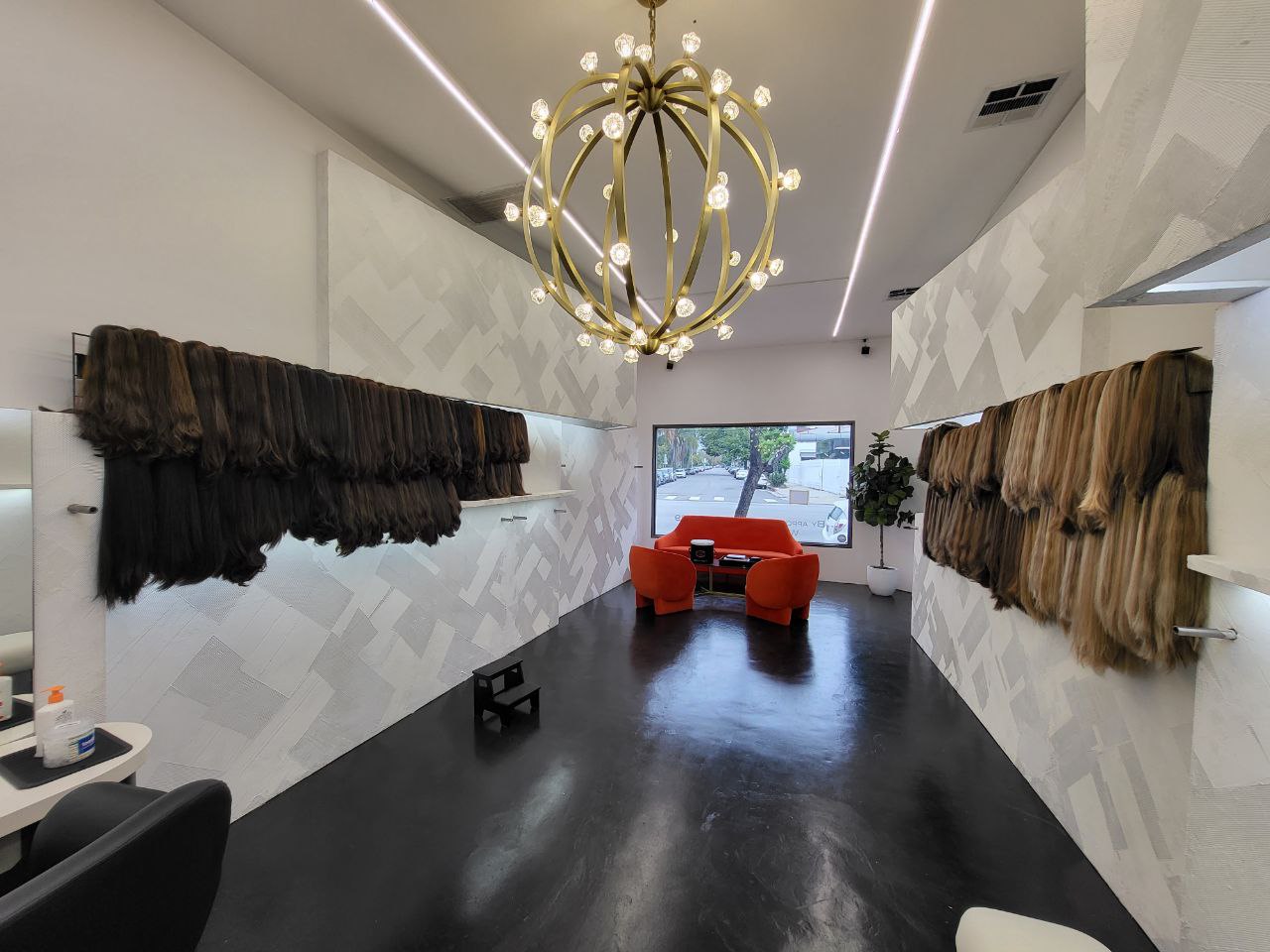
Consultations are available in person at our Los Angeles shop on West 3rd Street, or virtually if you are out of state, mid treatment, or simply not up to travelling. Both cover the same ground: what your diagnosis means for cap construction, what length and density will suit you, and exactly what paperwork we will prepare for your claim.
Questions we get asked
Which doctor should write the prescription?
Any licensed physician treating you for the underlying condition. Oncologists, dermatologists, endocrinologists, rheumatologists and primary care physicians all write these. Your dermatologist is often the most familiar with the coding.
Can a nurse practitioner or physician assistant write it?
In most cases yes, provided they hold an NPI and are practicing within their state scope. Confirm with the plan.
How long is a prescription valid?
Typically twelve months from the date written, though this varies by plan. If yours is older than a year, request a fresh one.
My hair loss is temporary. Do I still qualify?
Yes. Chemotherapy induced hair loss is temporary and is one of the most commonly approved indications. The prescription should state that the loss is temporary and give an expected duration.
Will insurance cover a custom human hair prosthesis, or only a synthetic one?
It depends on the plan and on the dollar cap. Many plans reimburse a fixed amount regardless of the piece selected, which you can apply toward a custom human hair prosthesis and pay the difference. Ask about the cap, not about the material. Our honest guide to what a custom human hair wig costs explains what drives the price.
Do I need to buy from an in network provider?
Some plans require it, many do not and will reimburse you directly. Question five in Step 1 settles this.
What if I already bought my prosthesis?
Submit anyway. Some plans reimburse retroactively. If the denial is based on the purchase preceding the prescription, that is a specific, documented denial reason you can address in an appeal with a physician letter confirming the clinical need existed at the time of purchase.
How do I know what size and length to ask for?
Start with our cap size and head measuring guide, and if total hair loss means a standard cap will not sit securely, look at our large cap human hair wigs. If you still have partial coverage, a hair topper may be the better piece.
Keep reading
- The complete guide to medical wig insurance coverage
- Can you use your FSA or HSA for a human hair wig?
- Writing off a medical wig on your taxes
- Are medical wigs sales tax free in California?
- Understanding the different types of alopecia
- Choosing a human hair wig after hair loss
- Watch: Chloe Bean's experience with alopecia
- Custom human hair wigs in Los Angeles
- Medical wigs and cranial prostheses
- All human hair wigs and sheitels
This guide is general information about insurance documentation practices and is not medical, legal or tax advice. Coverage depends entirely on the terms of your individual plan. Tallie Wigs does not guarantee reimbursement.
Tallie Wigs 8362 W 3rd St, Los Angeles, CA 90048
(323) 496-3229 · tallie@sheitels.com