What Is European Hair? The Science Behind the Finest Wig Hair
Book a ConsultationPrivate, by appointment, in Los Angeles

Share
In the world of human hair wigs, "European hair" is spoken of almost with reverence. Wig makers reserve it for their finest pieces, medical clients ask for it by name, and it is the hair most often recommended for a topper that has to disappear into thinning hair. Yet few people can say what it actually is. This article explains what European hair means, why it is so fine, why so much of it grows straight or softly wavy, and why those traits make it so prized in a wig.
What European Hair Means in a Wig
European hair is human hair collected from donors in Europe, most of it today from Eastern Europe. Within that family, wig makers use more specific names: Slavic hair for the fine hair of the Slavic regions, and Russian or Ukrainian hair when the source country is known. Our article What Is Slavic Hair? untangles those names.
When people ask what European hair type means, they usually mean a set of traits rather than a map: a slim strand, a smooth cuticle, a straight to wavy pattern and a wide range of natural shades, many of them light. Those traits are what you are paying attention to when you choose a European hair wig.
Why Is European Hair So Thin?
Each hair grows from a follicle, and the size of the follicle sets the diameter of the strand. Hair from European donors tends to grow from smaller follicles, which produces a slimmer strand. Diameter varies from person to person, but as a group European hair is among the finest hair used in wigs.
Thin is not weak. A single fine strand is soft and light, but a head of fine hair is often very dense, with more strands per square inch. In a wig, that combination is ideal: a maker can build a full-looking piece with less weight on the cap.
Why Is European Hair Straight or Softly Wavy?
The shape of the follicle shapes the strand. A round follicle tends to produce a round strand that grows straight. An oval follicle produces a flatter strand that bends as it grows, which is why waves and curls form. Many European donors have round to slightly oval follicles, so their hair grows straight or with a soft S-wave rather than a tight curl.
That natural pattern matters in a wig, because hair that grows straight or wavy can be set into curls or blown smooth and will return to its own pattern when washed. Nothing has to be chemically forced.
The Cuticle: Why European Hair Feels So Soft
Every strand is wrapped in a cuticle: overlapping scales, a little like roof tiles, that protect the inner hair. On a fine European strand the cuticle lies flat and smooth, which is why the hair feels silky and reflects light with a soft satin sheen rather than a glassy shine.
When hair is collected with care, kept in the direction it grew and never stripped, that cuticle survives into the finished wig. It is the single most important reason a good European hair wig stays soft and tangle-resistant for years. Our article Remy vs Virgin vs European Hair explains how collection and processing affect the cuticle.
Pigment: Why So Many Natural Shades
Hair color comes from two kinds of melanin: eumelanin, which gives brown and black, and pheomelanin, which gives warm golden and red tones. Eastern European hair spans an unusually broad range of natural combinations, from deep brown to ash, honey and dark blonde.
For a wig, that range means a colorist can often reach the shade a client wants with little or no lightening. Every round of bleach lifts and roughens the cuticle, so hair that starts close to its final color stays healthier for longer.
Why European Hair Is So Prized
People often ask why European hair is so expensive. The honest answer is that it is prized, and scarce, for reasons that follow from everything above:
- Little of it is collected. Long, healthy, uncolored hair from a single donor is uncommon, and it takes years to grow.
- It needs little processing. Its natural fineness and color mean it can go into a wig close to how it grew.
- It suits the most demanding uses. Medical wigs, toppers and lace tops all show the hair's quality up close.
- It lasts. Hair with an intact cuticle holds up to years of washing and styling.
Who Benefits Most from European Hair
For women living with hair loss from chemotherapy, alopecia or thinning, European hair's lightness is more than a luxury. A wig worn every day on a sensitive scalp feels noticeably different when it is lighter and cooler, and a fine strand blends into regrowth and fine remaining hair. Our guide European Hair Wigs for Chemo and Alopecia covers that choice in depth. For thinning at the part, see Virgin Slavic Hair Toppers. Many sheitel wearers also choose European hair for the way it moves at a natural part.
How to Tell Real European Hair from a Label
"European" is printed on many tags, and not every tag is accurate. A few signs help:
- Feel a few strands between your fingers. European hair is noticeably slim and smooth.
- Look at the shine in daylight. A soft satin sheen suggests an intact cuticle; a glassy gleam often means a coating.
- Look at the ends. Natural ends taper slightly. Blunt, uniform ends can mean heavy trimming of mixed hair.
- Ask about the source. A seller who knows will tell you the region and how the hair was collected.
- Ask about processing. Has it been colored, lightened or coated? Our article on virgin vs processed hair wigs explains why it matters.
European Hair at Tallie Wigs
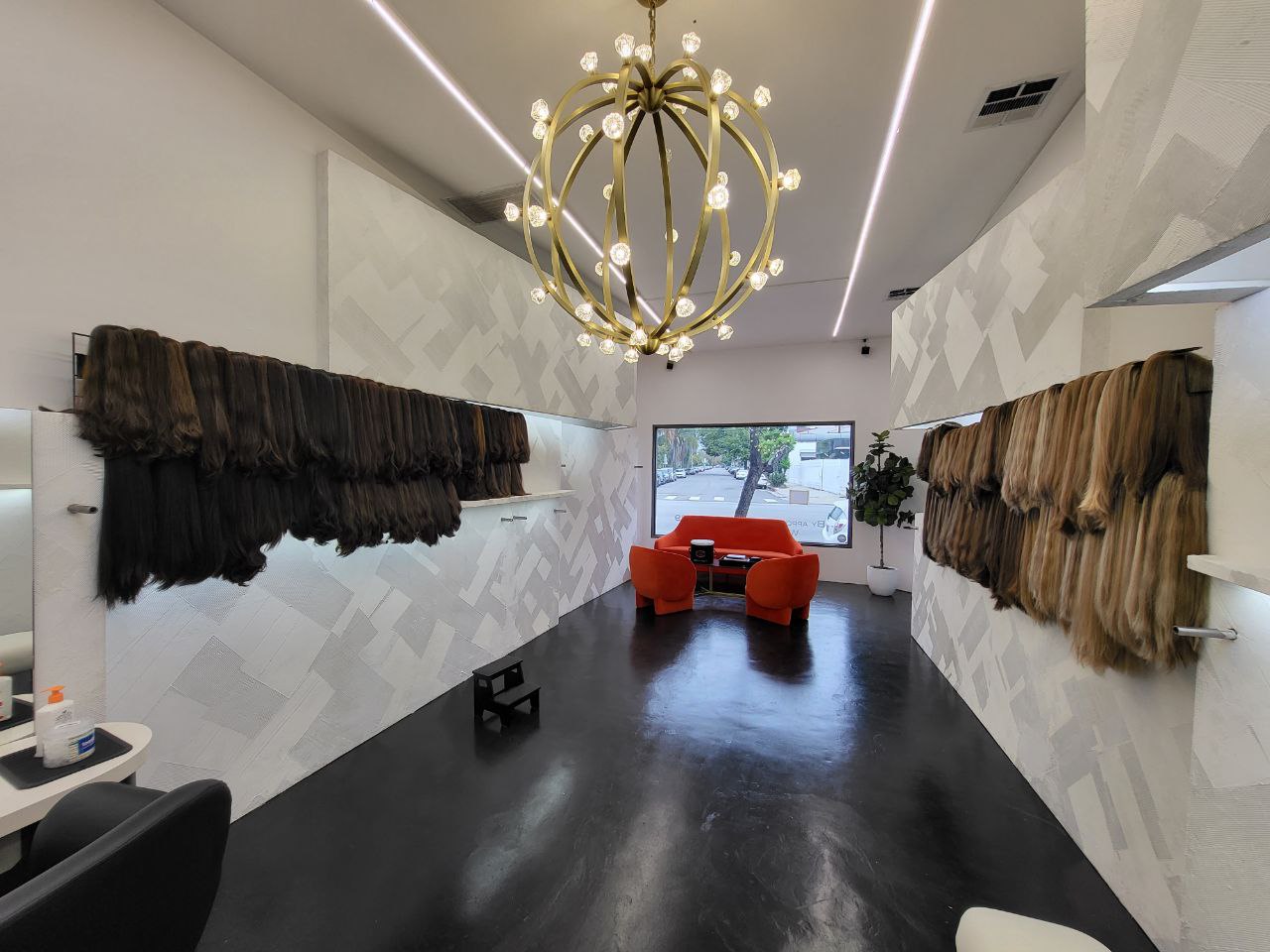
Tallie selects European, Slavic, Russian and Ukrainian hair bundle by bundle, feeling for the slim strand, smooth cuticle and natural ends described above, and she will tell you what hair is in any wig you try. Each piece is fitted, cut and colored on you in a private room at our shop on W 3rd St in Los Angeles. See all four origins on our European human hair wigs page.
Book a Private Fitting Have a question about the hair before you come in? Call or text (323) 496-3229.
Frequently Asked Questions
What is European hair?
Human hair collected from donors in Europe, today mostly Eastern Europe. It is valued in wigs for its slim strand, smooth cuticle, straight to wavy pattern and natural range of shades.
Why is European hair so thin?
It tends to grow from smaller follicles, which produce a slimmer strand. Fine strands make a light wig that still looks full.
Why is European hair straight?
Round follicles produce round strands that grow straight, and slightly oval ones produce soft waves. Many European donors have that follicle shape.
Why is European hair so prized?
Little of it is collected, it needs little processing, it suits the most demanding wigs, and it lasts for years with care.
What is Eastern European hair type?
Generally fine, soft and straight or gently wavy, in shades from deep brown to dark blonde. Slavic, Russian and Ukrainian hair are part of this group.
Is European hair good for a medical wig?
Yes. Its light weight and soft cuticle suit a sensitive scalp, and it blends well with fine regrowth.